I’ve spent 20 years working inside the American healthcare system — specifically in home and community-based care, managing Medicare and Medicaid plans, and most recently overseeing home health benefits where every single service we delivered — home health, durable medical equipment, home infusion — was delivered inside someone’s home. I’m also a certified Aging in Place Advisor through Age Safe America and hold CAPS I, II, and III certifications through the National Association of Home Builders.
But the credential that hits the closest to home? I’m 49 years old, and like millions of people my age, I’ve watched my own parents and grandparents navigate the complicated, emotional,deeply personal experience of getting older in a home that wasn’t built with aging in mind.
So when I say I understand this topic from every angle — clinical, operational, regulatory, and deeply human — I mean it.
Here’s what I’ve learned.
Start With the Right Conversation
Before you move a single piece of furniture or buy a single grab bar, you need to get the conversation right. And most adult children get it wrong.
The instinct is understandable: you’re scared. You’ve noticed Mom moving a little slower, or Dad catching himself on the doorframe. You want to fix it. So you show up one Sunday and start talking about walkers and handrails and maybe it’s time to think about “options.”
And the wall goes up immediately.
Here’s what I’ve observed over two decades working with aging adults: the older generation is, by nature, extraordinarily resilient and independent. They’ve lived through things most of us can barely imagine. And the last thing they want — the absolute last thing — is for their adult child to walk into their home and imply they’re no longer capable of managing it.
The approach that actually works is this: frame every single conversation around enablingthem to stay in their home longer, not around managing their decline.
Instead of “Mom, we’re worried about you falling,” try “Mom, we want to make sure nothing gets in the way of you staying in this house for as long as you want.”
It’s not a subtle distinction. It’s everything. You’re aligning yourself with their deepest, most universal desire — to remain independent, in their own space, on their own terms. You’re not taking something away. You’re protecting what they’ve built.
Lead with that, and you’ll be surprised how quickly the walls come down.
The Hazard Everyone Talks About — And the Ones Nobody Does
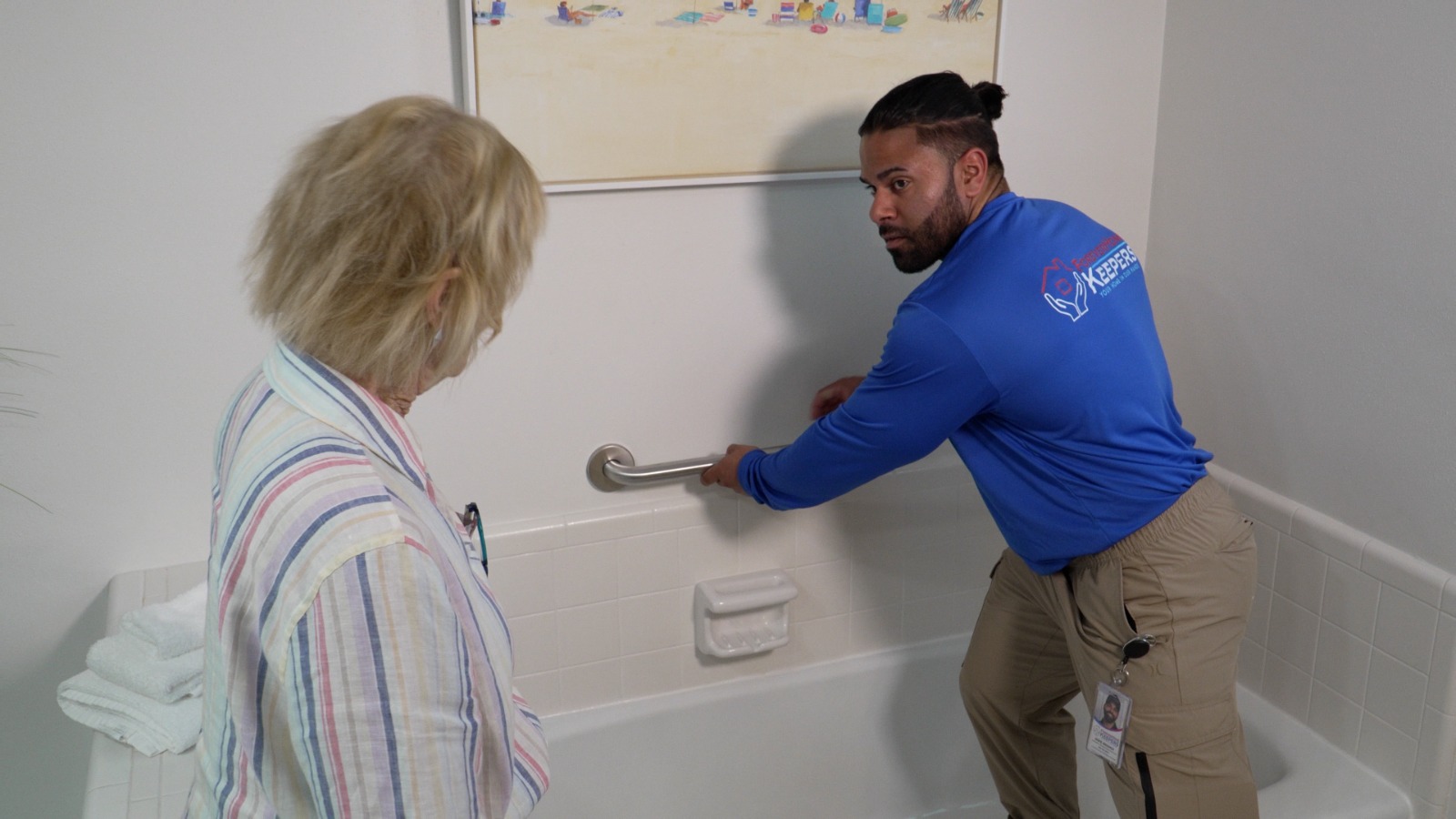
Yes, bathroom safety matters enormously. Grab bars, non-slip mats, walk-in showers, raised toilet seats — these are well-documented and worth every penny. I won’t spend much time here because frankly, the internet is full of good bathroom safety advice.
What I want to talk about are the hazards that don’t get nearly enough attention: the everyday trip hazards hiding in plain sight throughout the rest of the home.
Falls are the leading cause of injury-related death among adults 65 and older in the United States. And while we’re all focused on the bathroom, people are tripping over throw rugs in the hallway, catching their feet on furniture legs in the living room, snagging power cords snaked across the floor, and navigating rooms that simply aren’t lit well enough for aging eyes.
These are not glamorous problems. They don’t require a contractor or a permit. But they are responsible for an enormous number of preventable falls — falls that can fundamentally alter the trajectory of an older adult’s ability to remain at home.
What You Can Do This Weekend (For Free, or Close to It)
Let’s start with the single most impactful low-cost change you can make right now:
Remove every throw rug in the house. Every single one.
If the homeowner is emotionally attached to certain rugs — and many are, because those rugs have stories — replace them with very low-profile, anti-slip rugs that have a full adhesive backing that grips the floor underneath. Not a rug pad. Not double-sided tape on the corners. A purpose-built, anti-slip rug with adhesive backing designed specifically for fall prevention.
Throw rugs are fall traps. Edges curl. Corners catch. Feet don’t clear them the way they used to. And unlike a wet bathroom floor, nobody looks at a throw rug as a hazard — which is precisely what makes it so dangerous.
Beyond rugs, do a walk-through of every room with fresh eyes and ask yourself three questions:
- 1. Can you walk a clear path through every room without stepping around, over, or between anything? Furniture that made perfect sense for a younger person’s home — the decorative table in the hallway, the extra chair by the window — can become an obstacle course for someone whose gait has changed or whose depth perception isn’t what it was. Rearrange or remove anything that narrows pathways or creates detours.
- 2. Are there any cords crossing walking areas? Extension cords, lamp cords, phone chargers — if it crosses a floor, it’s a hazard. Reroute along baseboards, use cord management clips, or eliminate the need for the cord entirely.
- 3. Is there enough light? Aging eyes need significantly more light than younger eyes to see the same level of detail — some estimates suggest two to three times more. Walk through the home at night and identify every dark transition: the path from bedroom to bathroom, the top and bottom of stairs, the entry from the garage. Night lights are cheap. Hip fractures are not.
Thinking Bigger: The Aging-in-Place Mindset
If you want to go beyond the weekend fixes, the framework I use when assessing a home isbuilt around one central question: what are the risks that could end this person’s ability to stay here — and how do we eliminate or reduce them?
That means looking at the home not as it is today, but as it will need to be over time. Doorways wide enough for a walker or wheelchair. Lever-style door handles instead of round knobs (arthritis makes a round knob surprisingly difficult to turn). A bedroom and full bathroom accessible on the main floor so that stairs don’t become a barrier if mobility changes.
Some of these modifications are simple and inexpensive. Others — like widening doorways or installing a residential elevator or a stair lift — are more involved investments. But the math often favors modification: the average cost of a nursing home in the United States runs well over $90,000 per year. Most home modifications cost a fraction of that and can extend independent living by years.
For families who want a comprehensive assessment, I’d recommend seeking out a CAPS-certified professional (Certified Aging in Place Specialist) through the NAHB, or connecting with an Aging in Place Advisor through Age Safe America. A formal home safety assessment will give you a prioritized list of modifications specific to your home and your loved one’s current and anticipated needs — so you’re not guessing, and you’re not wasting money fixing the wrong things.
The Bottom Line
Making a home safer for an aging parent isn’t about confronting decline. It’s about protecting independence. It’s about removing the obstacles — physical and emotional — that stand between your loved one and the life they’ve built and want to keep living.
Start with the conversation, and start it right. Align yourself with their goal, not your fear.
Then take a hard look at the floors, the lighting, and the pathways. Fix what you can this weekend. Make a plan for the rest.
And remember: the goal isn’t to turn their home into a clinical environment. The goal is to make sure nothing preventable gets in the way of them staying exactly where they want to be —home.