I’ve spent 20 years working inside the American healthcare system, specifically in home and community-based care, where every service we delivered was delivered inside someone’s home. Home health nurses. Durable medical equipment technicians. Home infusion specialists. Every single one of them walked through a front door, into a private space, often when a family member wasn’t present.
That experience shaped the way I think about who earns the right to be in someone’s home.
I’m also a Certified Aging in Place Specialist through the National Association of Home Builders and a certified Aging in Place Advisor through Age Safe America. Forever Home Keepers serves two groups of homeowners specifically seniors and Veterans and in both cases, the people we work with have earned a standard of care that goes well above what most handyman services provide.
I’ve assessed hundreds of homes, coordinated dozens of vendors, and like a lot of people my age, navigated the deeply personal experience of finding trustworthy help for my own aging family members.
So, when I tell you this question matters more than most people realize, I mean it.
Here’s what I’ve learned.
The Wrong Question — and the Right One
Most people hiring a handyman lead with one question: how much does it cost?
That’s the wrong first question.
Not because price doesn’t matter, it does. But when you’re talking about someone entering a senior’s home, often without family present, the first question out of your mouth should be this: who exactly is this person, and what gives them the right to be here?
The cost of a bad hire isn’t measured in dollars. It’s measured in what happens after they leave.
A grab bar that looks installed but isn’t anchored properly. A railing that feels secure until it isn’t. And real questions about whether the person you let in was the right person to let in at all. I’ve seen the consequences of skipping this conversation. Start with the right question.
Licensing and Insurance Are Not a Formality
The first two things you should ask any handyman, before you schedule, before you discuss the job, before anything else, are straightforward:
Are you licensed? And are you fully insured?
Then ask to see both.
Not a verbal confirmation. Not a badge on a website. Actual documentation, a license number you can verify through your state’s licensing authority and a certificate of insurance that lists general liability coverage.
(Note: licensing requirements and regulatory bodies vary by state. In Florida, you can verify through the Florida Department of Business and Professional Regulation. If you are in another state, search for your state’s equivalent contractor licensing agency.)
If a handyman hesitates, deflects, or tells you it isn’t necessary for “small jobs”, that is your answer.
Not every task requires a contractor’s license, but general liability insurance is non-negotiable. If someone damages your parent’s home or is injured while working in it, you need to know there is coverage in place. Without it, the liability falls on the homeowner.
This is not a technicality. It is the foundation.
The Question Nobody Thinks to Ask, But Should
Here is what I tell every family I work with: ask whether the people coming into your parent’s home are background-checked.
Most people never ask. It doesn’t occur to them, or it feels awkward. But if you’ve spent some time in healthcare, as I have, you know that background checks are standard practice for anyone entering a vulnerable person’s home. It should be no different for a handyman.
A qualified, professional operation background-checks every person they send into a client’s home. Full stop.
This matters for any senior homeowner. It matters especially for Veterans, who have earned an unambiguous standard of trust and accountability in every service they receive.
If the answer is no, or if the handyman is a solo operator who has never considered the question, that is worth knowing before they walk through the door. This isn’t about suspicion. It’s about the basic standard of care your family deserves.
Ask directly. A trustworthy professional will not be offended.
The Credentials That Actually Matter for Senior Homework
Not all handyman work is the same. And when the job involves modifications for an aging adult, grab bars, railings, accessibility upgrades, fall prevention, the qualifications that matter go beyond a general contractor’s license.
There are two credentials I look for specifically in this space.
The first is CAPS, Certified Aging in Place Specialist, a designation through the National Association of Home Builders. CAPS-certified professionals have been trained in the technical and practical solutions involved in modifying homes for aging adults. It is the industry standard for this type of work.
The second is training through Age Safe America, which focuses on home safety assessment and fall prevention for older adults. Professionals trained through Age Safe America understand not just what to install, but where, why, and how it fits into a senior’s daily life and mobility.
Most handymen have never heard of either credential. That is the gap.
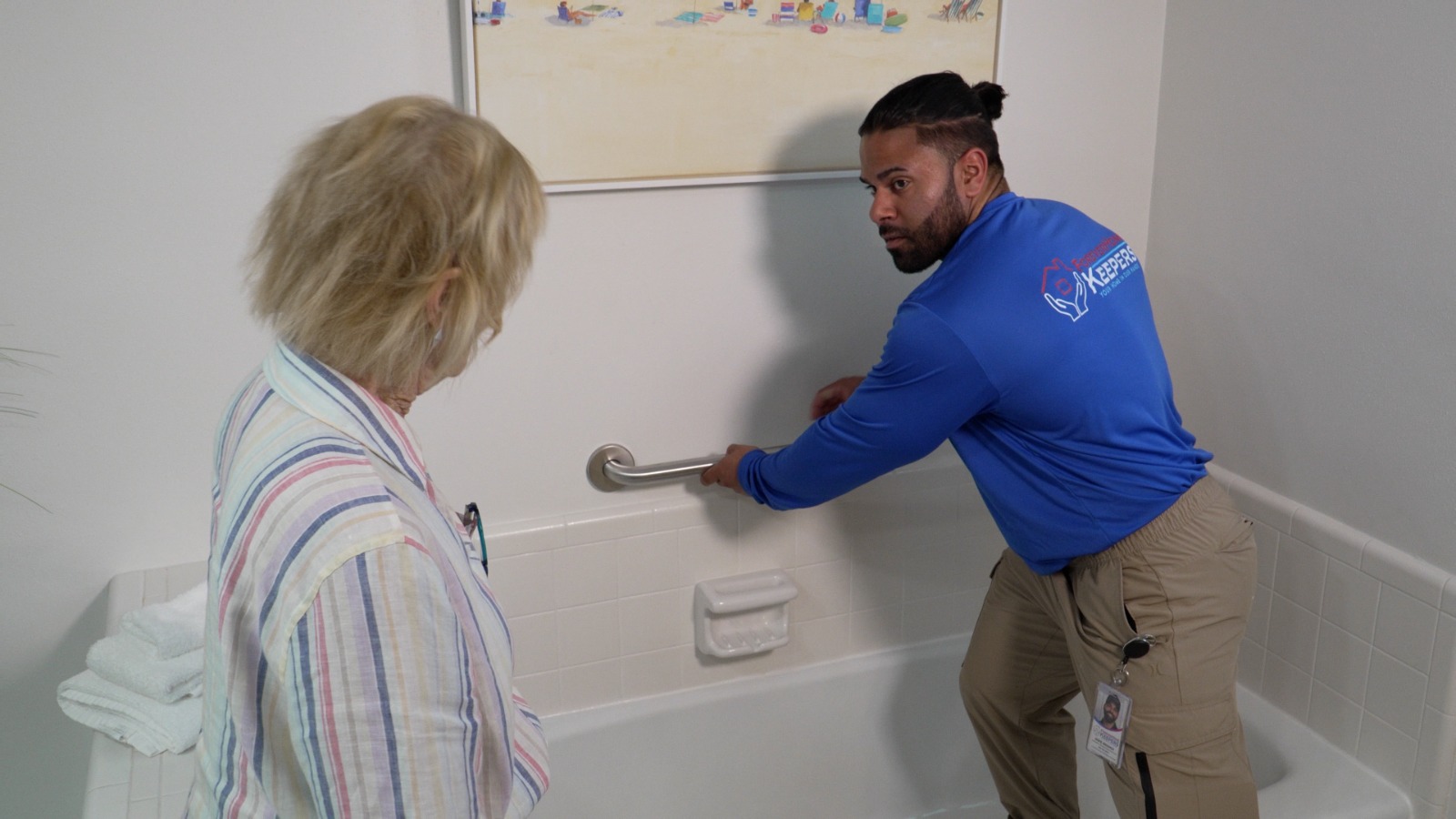
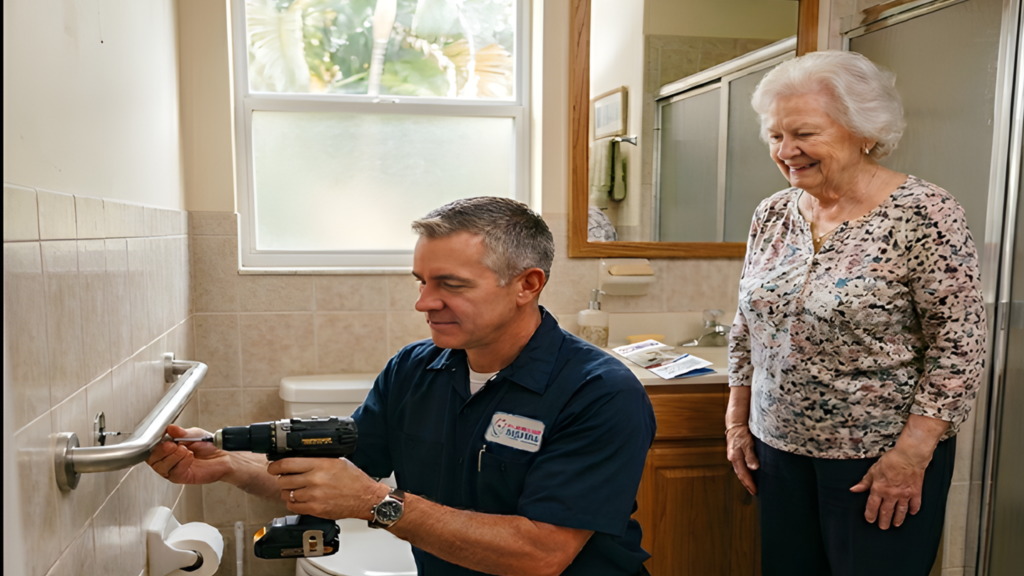
If you are hiring someone to install a grab-bar or modify a bathroom for an aging parent, you want someone who understands why the height and placement matter, not just someone who can drive a screw into a wall stud.
What Documentation After the Visit Should Look Like
Here is something most families don’t think to ask about until after something goes wrong.
When a qualified professional completes work in your parent’s home, you should receive documentation. Before-and-after photos of the work. A clear record of what was done, where, and when.
If a handyman finishes a job and walks out the door without leaving any record of the work, that is not a professional standard.
For families who aren’t present at every visit and most adult children aren’t, documentation is the only way to know the work was done correctly. Timestamped, geotagged photos delivered to your inbox after every visit is the baseline we hold ourselves to at Forever Home Keepers, because accountability is not optional when you’re working inside someone else’s home.
Ask any handyman you’re considering: what documentation will I receive after the work is complete? The answer will tell you a great deal about how they operate.
The Red Flags Worth Walking Away From
After two decades in healthcare and home services, here is my short list of things that should give any family break:
No license or insurance on request. No clear answer on background checks. A price significantly lower than everyone else, with no explanation for why. Pressure to pay in full before work begins. Vague answers about what exactly will be done and how. A reluctance to put anything in writing.
Any one of these should slow you down. More than one should stop you entirely.
The handyman market, particularly in the senior space, attracts both excellent professionals and opportunists. The gap between the two is not always visible at first. That is exactly why the questions matter.
The Bottom Line
Finding a qualified handyman isn’t complicated. But it does require asking the questions most people skip.
License. Insurance. Background check. Relevant credentials for the work being done. Clear documentation after every visit.
These are not unreasonable expectations. They are the baseline standard that anyone working in your parent’s home should meet without hesitation.
The goal isn’t to make the process harder. The goal is to make sure the person you let through the door deserves to be there and that the work they do holds up long after they’ve left.
That is what your family deserves. That is what your parent’s home deserves.
If you’d like to learn how Forever Home Keepers approaches this, from background-checked professionals to documented, certified aging-in-place modifications, we’d be glad to start with a free in-home assessment.
Contact us at : contact@foreverhomekeepers.com or call 813-421-5270 to schedule yours today.